

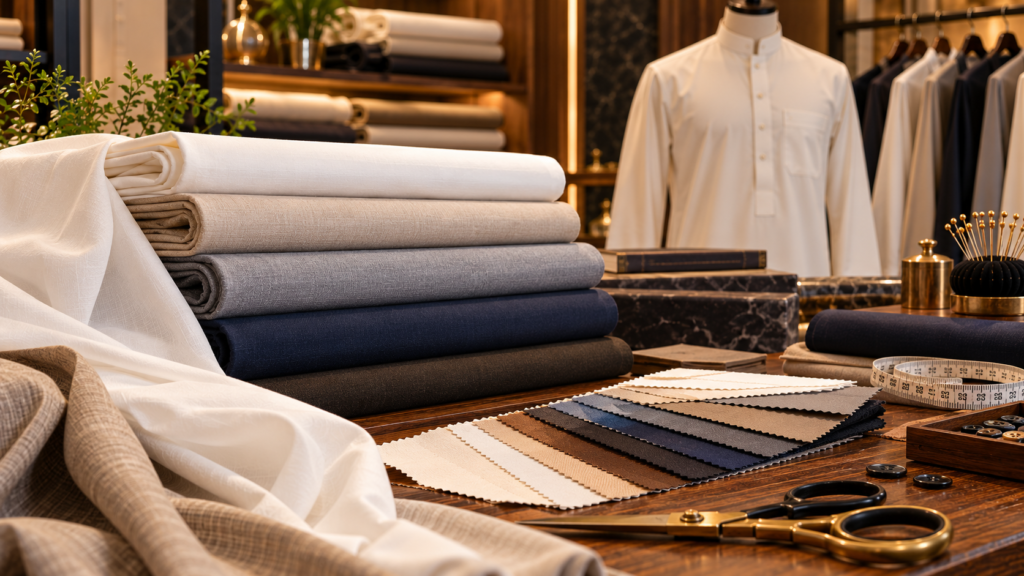
Choosing the right fabric is one of the most important steps when ordering a custom men’s Kameez Shalwar. The fabric affects how the outfit feels, how it drapes, how comfortable it is throughout the day, and how well it suits the occasion.
Whether you need an outfit for everyday wear, work, family gatherings or formal events, the right material can make a noticeable difference. Understanding fabric types, texture, weight and maintenance will help you make a more informed decision before visiting your tailor.
In this guide, we explain what to consider when choosing fabric for a men’s Kameez Shalwar and how to find an option that suits your style and needs.
Why Does Fabric Choice Matter?
Fabric influences more than the appearance of your outfit. It also affects comfort, movement, breathability, drape and maintenance.
For example, a lightweight fabric may feel comfortable in warm conditions, while a heavier material may create a more structured appearance. Some fabrics wrinkle more easily than others, and certain materials require more careful washing and ironing.
Before choosing a fabric, consider these four factors:
- Comfort: Does the material feel comfortable against your skin?
- Weather: Is the fabric suitable for the temperatures in which you will wear it?
- Occasion: Do you need a relaxed everyday outfit or a more polished formal look?
- Maintenance: Can you care for the fabric according to its washing and ironing requirements?
Thinking about these factors first can help you narrow down your options.
1. Cotton: A Practical Choice for Everyday Wear
Cotton is a popular option for traditional men’s clothing because it is generally breathable and comfortable. Its feel and performance can vary depending on the weave, thickness and quality of the material.
Cotton Kameez Shalwar can be a suitable choice for daily activities, casual gatherings and regular use.
Consider cotton if you want:
- A comfortable option for frequent wear.
- A fabric available in a wide range of colours and textures.
- A material that is relatively straightforward to care for, depending on its construction.
- A traditional look that works well with different styles of Kameez Shalwar.
Keep in mind that some cotton fabrics wrinkle easily or shrink if they are not washed according to their care instructions. Ask your tailor about the fabric’s expected shrinkage before stitching.
2. Linen: A Relaxed and Lightweight Look
Linen is known for its natural texture and relaxed appearance. It is often considered for warm-weather clothing because it allows airflow, although the actual comfort depends on the fabric’s weight and construction.
Linen can work well for people who prefer a more relaxed, understated style.
Consider linen if you want:
- A lightweight feel for warmer conditions.
- A natural texture rather than a perfectly smooth finish.
- A relaxed look for daytime events and casual occasions.
- A fabric that develops character through its natural creasing.
One thing to remember is that linen naturally wrinkles. If you prefer a crisp, smooth appearance throughout the day, discuss this with your tailor before selecting the material.
3. Blended Fabrics: Balancing Different Qualities
Blended fabrics combine two or more types of fibres. The aim is often to balance qualities such as softness, durability, wrinkle resistance, appearance or cost.
However, not every blend performs the same way. Its properties depend on the fibres used and their proportions.
Consider a blended fabric if you want:
- A particular balance of comfort and easy maintenance.
- More options in texture and finish.
- A fabric suited to your preferred style and budget.
Always check the fabric composition and care label rather than assuming that every blend is wrinkle-resistant or suitable for every season.
4. Choose Fabric According to the Occasion
The best fabric for your outfit also depends on where you plan to wear it.
Everyday wear
For everyday Kameez Shalwar, prioritise comfort, ease of movement and practical care. Cotton or a suitable blend may be worth considering, depending on the weather and your personal preference.
Work and regular outings
Choose a fabric that feels comfortable for extended wear and maintains the appearance you prefer. A medium-weight material may offer a balanced look, but the ideal choice depends on the cut and construction of the outfit.
Weddings and formal gatherings
For formal occasions, consider the overall finish, texture, colour and drape. A more refined fabric can create a polished appearance when paired with suitable stitching and well-chosen details.
Warm-weather clothing
Look for fabrics that feel light and allow airflow. Cotton and linen are common options, but compare their actual weight, weave and feel before making a decision.
5. How Fabric Weight and Texture Affect the Fit
Two fabrics in the same colour can look completely different once stitched. Weight and texture influence how the Kameez falls over the body and how structured the finished outfit appears.
A lightweight fabric may drape softly, while a heavier fabric may hold its shape more firmly. Smooth fabrics can create a clean appearance, whereas textured materials may add visual interest without requiring elaborate design details.
When selecting fabric, consider how it will work with your preferred fit:
- Relaxed fit: Choose a material that allows comfortable movement and falls naturally.
- Structured fit: Discuss the fabric’s body and thickness with your tailor.
- Minimal design: Texture and fabric quality can add interest without excessive detailing.
- Formal styling: Consider how the fabric looks under indoor lighting and how it pairs with your chosen colour.
Your tailor can help assess whether the fabric will suit the design you have in mind.
6. Choosing the Right Fabric Colour
Colour is another important part of choosing your Kameez Shalwar fabric. The right shade should complement your personal style and the occasion.
Neutral colours such as white, cream, beige, grey and navy can be versatile options. Darker shades may suit certain evening or formal looks, while lighter shades are often chosen for daytime outfits.
Before purchasing fabric, view the colour in natural light if possible. Lighting can change how a shade appears, and the finished outfit may look different from a small fabric sample.
It is also worth considering whether the colour will coordinate with footwear and any accessories you plan to wear.
7. Check Fabric Quality Before Buying
A fabric’s appearance alone does not tell you everything about its quality. Before committing to a material, inspect it carefully.
Here are a few useful checks:
- Feel the material: Check whether its texture is comfortable against your skin.
- Inspect the weave: Look for obvious defects, pulls or uneven areas.
- Check opacity: Make sure the fabric provides the coverage you expect, especially for lighter colours.
- Ask about shrinkage: Confirm whether pre-washing or other preparation is recommended.
- Review care instructions: Understand the washing, drying and ironing requirements.
- Allow for stitching: Ask your tailor how much fabric is needed for your chosen design and size.
Buying enough fabric is particularly important when matching patterns or adding details such as cuffs, collars and pockets.
8. Why the Tailoring Matters as Much as the Fabric
Even a good-quality fabric may not deliver the look you want if the garment is poorly fitted. Measurements, cutting, stitching and finishing all contribute to the final result.
A well-planned Kameez Shalwar should allow comfortable movement while maintaining the silhouette you prefer. Sleeve length, shoulder width, garment length and trouser fit should be considered together rather than independently.
When discussing your order with a tailor, explain how you intend to wear the outfit and what kind of fit you prefer. Bringing a reference image can also help communicate details such as collar style, cuffs and overall length.
If you are preparing to order a custom outfit, read our guide on how to take accurate measurements for men’s Kameez Shalwar for more information.
Common Mistakes to Avoid When Choosing Fabric
A few simple mistakes can make the selection process more difficult.
Choosing based on colour alone: A colour may look attractive, but the fabric should also suit the weather, occasion and required fit.
Ignoring care requirements: Some materials need more careful washing or ironing than others. Check these details before purchasing.
Not checking transparency: Light-coloured fabrics can vary significantly in opacity. Inspect the material before ordering.
Buying too little fabric: The required amount depends on garment measurements, fabric width, design and details. Ask your tailor before buying.
Overlooking the final design: A fabric that works well for one style may not suit another. Consider the complete outfit before making your final choice.
Final Thoughts
Choosing the best fabric for men’s Kameez Shalwar is about finding the right balance between comfort, appearance, occasion and maintenance. Cotton, linen and blended fabrics each offer different qualities, so the best option depends on how you plan to wear the outfit and what you expect from it.
Take time to compare materials, check their care requirements and discuss your preferred style with your tailor. Combining suitable fabric with accurate measurements and careful stitching can help you achieve an outfit that feels comfortable and looks well finished.
Looking for a custom Kameez Shalwar?
Explore Makki Tailor’s custom Kameez Shalwar stitching service to discuss your preferred fit and style. Choose your fabric, share your requirements and plan an outfit tailored to your needs.
Frequently Asked Questions
Which fabric is best for men’s Kameez Shalwar?
There is no single best fabric for everyone. Cotton, linen and blended fabrics can all be suitable depending on the weather, occasion, preferred appearance and care requirements.
Is cotton a good option for everyday Kameez Shalwar?
Cotton is often chosen for everyday clothing because it is generally breathable and comfortable. The fabric’s weight, weave and care requirements should still be considered.
Is linen suitable for Kameez Shalwar?
Linen can be a good option for a relaxed, lightweight look, particularly in warmer conditions. It naturally wrinkles, so consider whether that appearance suits your preferences.
How much fabric is needed for a men’s Kameez Shalwar?
The amount depends on your measurements, fabric width, garment design and additional details. Ask your tailor for an estimate before purchasing the material.
Should I choose the fabric before visiting a tailor?
You can choose fabric beforehand, but discussing your preferred design and fit with your tailor can help you select a suitable material and buy the correct amount.