

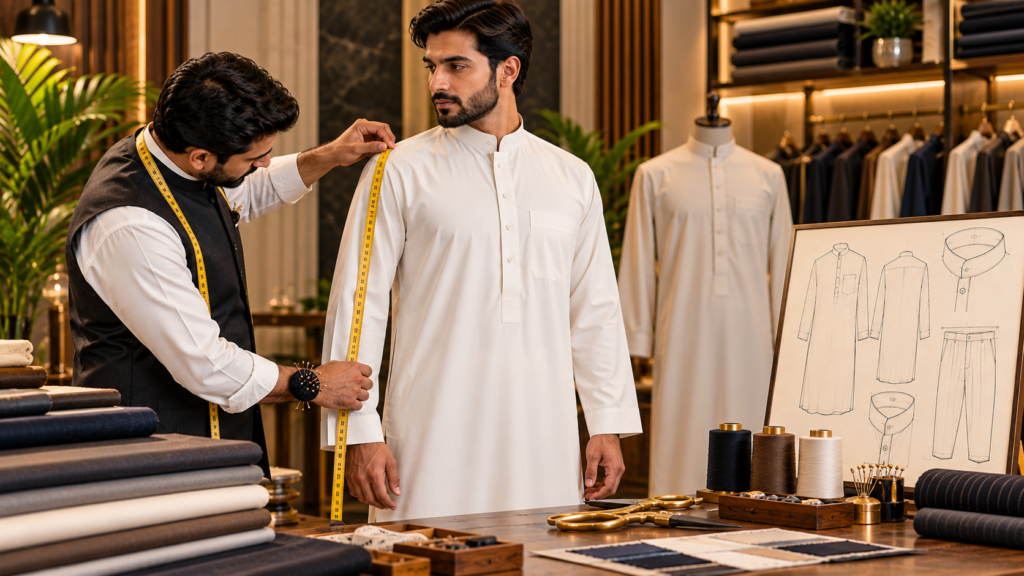
Getting the right fit is one of the most important parts of men’s traditional tailoring. Whether you prefer a classic Kameez Shalwar or a more modern silhouette, accurate measurements help your tailor understand your preferred length, shape and comfort.
If you are planning to order custom-stitched men’s Kameez Shalwar in Karachi, understanding the basic measurements can help you communicate your requirements more clearly and achieve a fit that suits your style.
In this guide, we explain the essential Kameez Shalwar measurements, how to take them correctly and what to discuss with your tailor before stitching begins.
Why Are Accurate Kameez Shalwar Measurements Important?
A well-fitted Kameez Shalwar should feel comfortable while allowing you to move naturally. Measurements provide a starting point for creating a garment according to your body shape and preferences.
Accurate measurements help your tailor assess:
- Overall fit: Whether you prefer a relaxed, regular or closer-fitting style.
- Garment length: How long you want your Kameez to fall.
- Shoulder fit: Where the shoulder seam should sit.
- Sleeve length: How the sleeves should fall around your wrists.
- Chest and waist: How much room you prefer through the upper body.
- Shalwar length and waist: How the lower garment should fit and sit.
Measurements alone do not guarantee a perfect fit. Fabric, cutting, garment design and individual preferences also influence the finished result.
1. Kameez Length
Kameez length is the measurement from the shoulder area near the neckline down to your preferred hem position.
How to measure: Stand straight and ask someone to measure from the chosen starting point near the shoulder down to the desired length.
Fitting tip: Decide whether you prefer a traditional longer Kameez or a shorter, contemporary style. Your usual footwear and preferred silhouette can also influence the length you choose.
2. Chest Measurement
The chest measurement helps determine how much room the Kameez needs around the upper body.
How to measure: Stand naturally and wrap a measuring tape around the fullest part of your chest. Keep the tape level and comfortably positioned without pulling it too tight.
Fitting tip: Tell your tailor whether you prefer a relaxed fit or a more structured silhouette. The finished garment needs appropriate ease for comfortable movement.
3. Waist Measurement
The waist measurement helps your tailor understand the shape and room required around your midsection.
How to measure: Wrap the measuring tape around your preferred waist position while standing naturally. Keep the tape comfortable and avoid pulling your stomach in.
Fitting tip: Explain whether you want the Kameez to fall straight or have a more shaped appearance through the waist.
4. Shoulder Measurement
Shoulder measurement influences how the Kameez sits across the upper body.
How to measure: Measure across the back from one shoulder point to the other, following the measurement method your tailor uses.
Fitting tip: Avoid guessing shoulder width from a garment that fits differently from your preferred style. A tailor can help identify the appropriate shoulder points.
5. Sleeve Length
Sleeve length affects both the appearance and comfort of your Kameez.
How to measure: With your arm relaxed, measure from the shoulder point to your preferred sleeve ending near the wrist.
Fitting tip: Keep your arm in a natural position while measuring. Mention whether you prefer a standard sleeve length or a different finish.
6. Neckline and Neck Measurement
The neckline contributes to the overall appearance of the Kameez. Its shape and opening should suit your preferred design.
How to measure: Follow your tailor’s method for measuring the neck and specifying the neckline opening. Avoid making the opening too tight or too loose based on guesswork.
Fitting tip: Discuss the collar or neckline style before stitching. A traditional neckline and a more contemporary design may require different finishing details.
7. Shalwar Length
Shalwar length determines where the garment falls around your ankles and footwear.
How to measure: Measure from the intended waist position down to the desired hem, following your tailor’s measurement method.
Fitting tip: Explain how you usually wear your Shalwar and whether you prefer a fuller or more streamlined appearance.
8. Shalwar Waist Measurement
The waist measurement helps establish how the Shalwar will sit and how much room is required.
How to measure: Measure around the position where you intend to wear the Shalwar. Your tailor should account for the garment’s waistband or elastic construction and the intended fit.
Fitting tip: The finished waist should feel secure without being uncomfortable when sitting, walking or bending.
Additional Measurements Your Tailor May Need
Depending on your preferred design and the tailor’s cutting method, additional measurements may be required.
These can include:
- Kameez armhole and bicep
- Sleeve opening
- Kameez bottom width
- Shalwar hip and thigh
- Shalwar bottom opening
- Side slit or hem preferences
Not every design requires the same set of measurements. Your tailor can identify which details are necessary for your selected garment.
Common Measurement Mistakes to Avoid
Small mistakes during measuring can affect how a garment fits. Keep these points in mind before placing your order.
Using a stretched or incorrectly positioned measuring tape
Keep the tape level and comfortably positioned. It should not be twisted or pulled excessively tight.
Measuring over bulky clothing
Thick clothing can affect the reading. Follow your tailor’s instructions about what to wear during measurement.
Guessing measurements from memory
Previous measurements may no longer reflect your current fit preferences. Confirm the required measurements before ordering.
Forgetting your preferred fit
Two people with similar body measurements may prefer very different garment styles. Tell your tailor whether you prefer a relaxed, regular or more fitted look.
Changing design details after measuring
Changes to the neckline, sleeves, length or overall silhouette can affect the final garment. Discuss your preferences before stitching begins.
Should You Take Measurements Yourself or Visit a Tailor?
You can take basic measurements at home if you have a flexible measuring tape and someone to help you. However, certain measurements are easier to assess with an experienced tailor, particularly when you want a specific silhouette or have detailed fitting preferences.
If you are ordering custom stitching, share your measurements along with your design requirements. Ask your tailor to clarify any measurements that are uncertain rather than estimating them.
For customers looking for custom Kameez Shalwar stitching in Karachi, discussing the desired fit, fabric and garment details before placing an order can make the process clearer.
What Should You Tell Your Tailor Before Stitching?
Before confirming your order, prepare the following information:
- Your required garment type
- Current body measurements, where available
- Preferred Kameez and Shalwar length
- Desired fit: relaxed, regular or fitted
- Neckline, sleeve and other design preferences
- Fabric selection, if already decided
- Any reference image or existing garment that demonstrates your preferred fit
Providing these details helps your tailor understand what you want. If you are unsure about a measurement or design choice, ask for guidance before the garment is cut.
Get Started with Custom Kameez Shalwar Stitching
The right measurements are an important first step towards a garment that reflects your personal style and comfort preferences. By preparing your measurements and discussing the details with your tailor, you can make more informed decisions about your custom-stitched Kameez Shalwar.
At Makki Tailor, you can enquire about your tailoring requirements and discuss the fit and garment details you have in mind.
Ready to discuss your stitching requirements? Visit our Custom Kameez Shalwar Stitching service page or send an enquiry to get started.
Frequently Asked Questions
What measurements are needed for men’s Kameez Shalwar?
Common measurements include Kameez length, chest, waist, shoulders, sleeve length, neckline, Shalwar length and Shalwar waist. Additional measurements may be required depending on the design.
Can I measure myself at home?
You can take some basic measurements at home, but having another person help you can improve consistency. For measurements you are unsure about, consult your tailor.
How tight should a Kameez Shalwar fit?
That depends on your personal preference and the intended design. Discuss whether you want a relaxed, regular or fitted silhouette, while allowing sufficient room for comfortable movement.
Should I provide measurements from an old Kameez Shalwar?
An existing garment can help communicate your preferred fit, but it may not provide every measurement your tailor needs. Explain what you like about its fit and confirm the required measurements.
Do I need different measurements for every style?
Some basic measurements are shared across styles, but different designs can require additional details. Your tailor can confirm the measurements needed for your selected garment.